AI art in 2026 looks dramatically different from just a year ago. Character-consistent generation, AI video creation, custom-trained models, and real-time multimodal workflows are changing how creators produce content at every level. Here are the most important AI art trends shaping 2026 — and what they mean for artists, brands, and content creators.
AI Art Trends 2026: Quick Overview
Before diving in, here's what's actually new this year:
- Photorealism is no longer a differentiator — it's the floor
- Multimodal pipelines (text → image → video → audio) are becoming single-session workflows
- Custom model training is accessible to non-engineers
- Character consistency across generations is now a practical capability
- AI-generated video is compressing production timelines for studios and solo creators alike
- Digital provenance standards are gaining real adoption
1. Hyper-Realistic Image Generation Is Now the Baseline

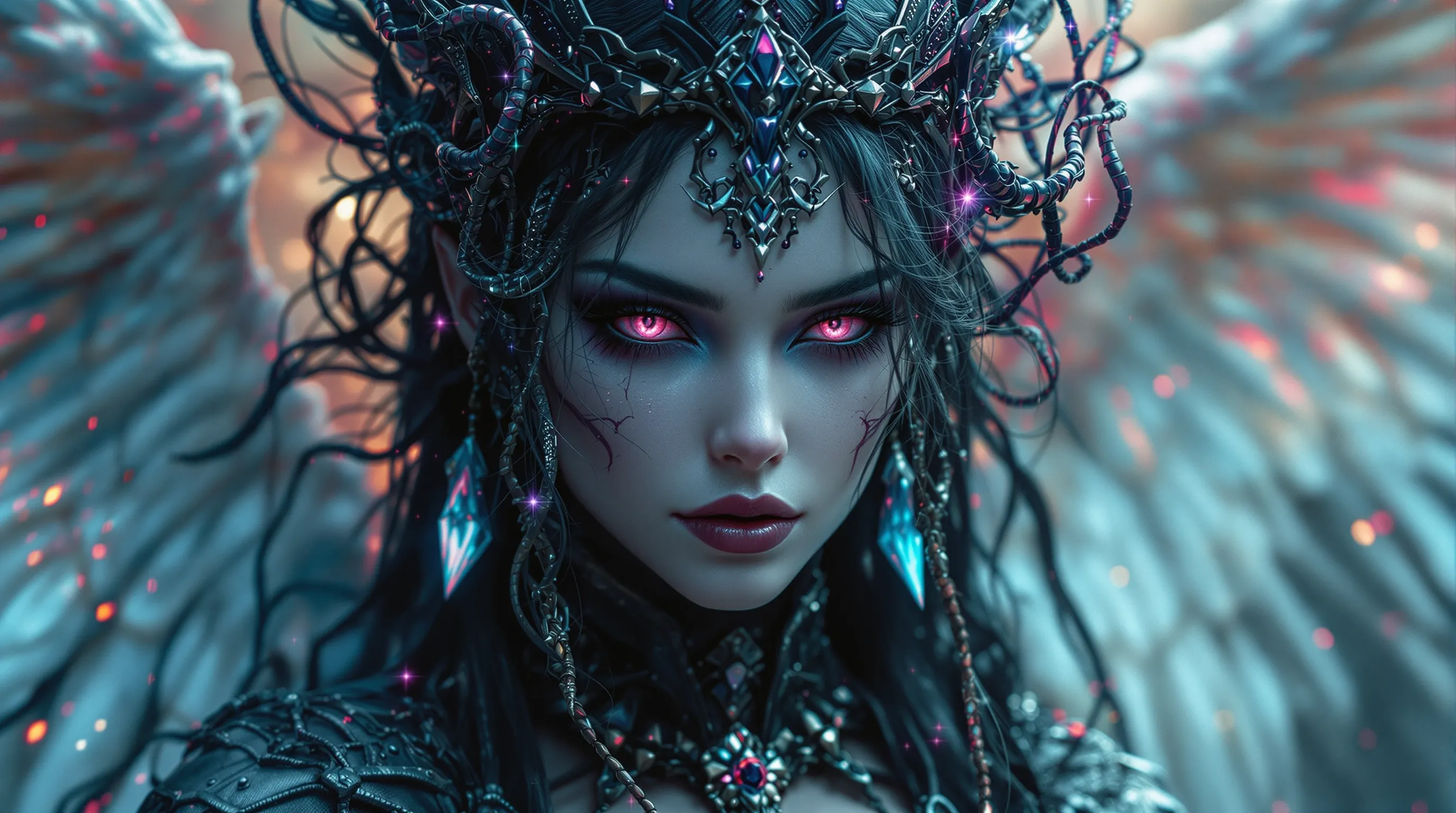
Created by @mikhailarose
Photorealism used to be the benchmark of cutting-edge AI art. Now it's table stakes. Models like Nano Banana 2 and similar commercial-grade tools can render fine skin textures, accurate light falloff, and lifelike material surfaces with minimal prompting effort.
The practical implications are significant. Brands can generate product shots, marketers can create campaign visuals, and independent creators can produce portrait work that previously required professional studio setups. The creative bottleneck has shifted from can the AI do this? to how well can I direct it?
The next frontier isn't realism — it's synthetic product photography. Brands are now using AI-generated environments to stage products without physical shoots, reducing production costs while maintaining full creative control over lighting, context, and composition.
What this means for you: Mastering descriptive, layered prompts is the core skill. Specify lighting conditions, mood, lens style, and subject details to get consistently professional outputs.
2. Multimodal AI: One Workflow, Multiple Formats
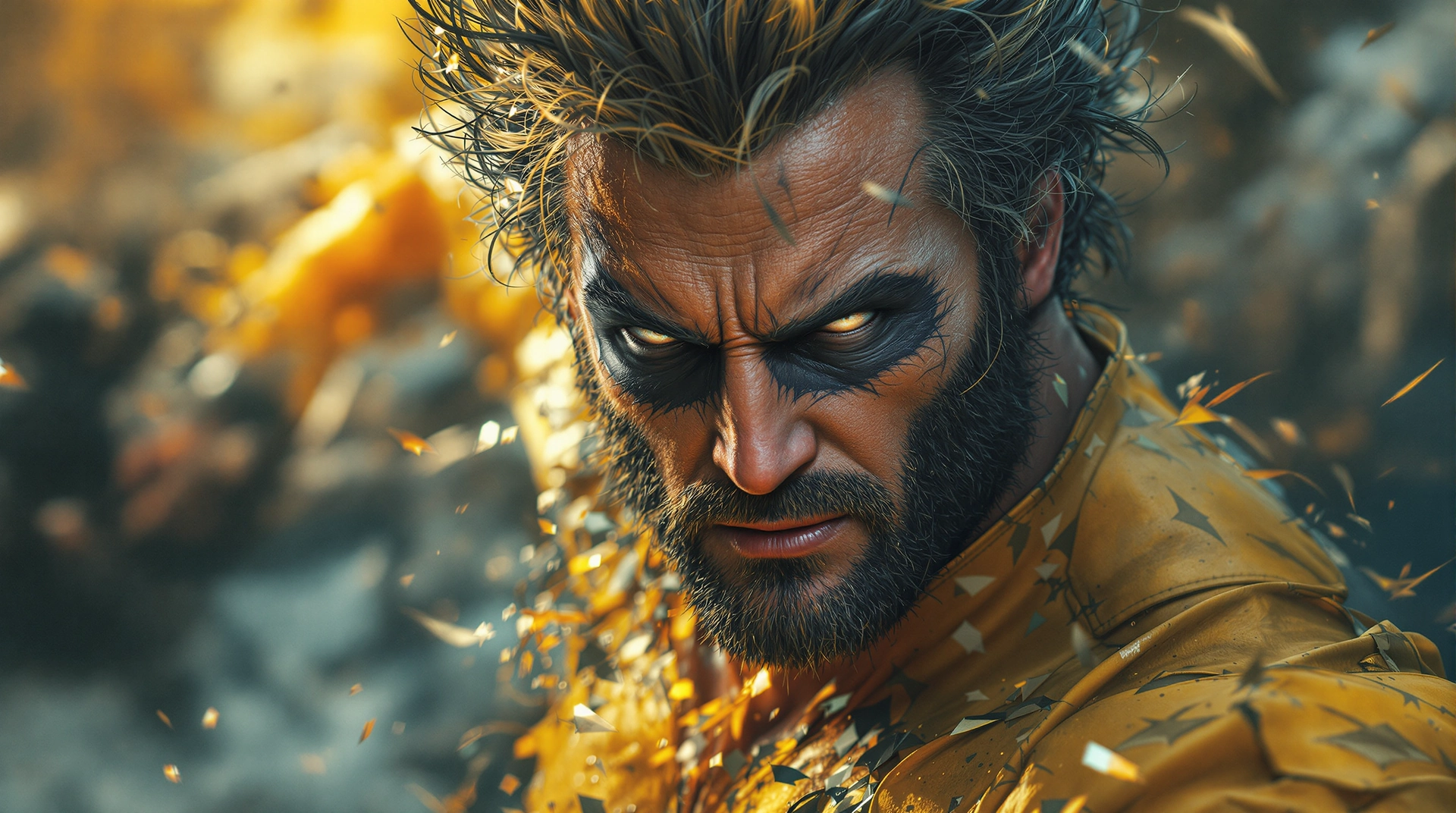
Created by @seth
The most significant structural shift in AI art right now isn't a better image model — it's the collapse of barriers between media types. In 2026, leading platforms let you move from a text prompt to an image, to a video, and layer in audio, all within a single creative session.
This is already live in tools that support image-to-video pipelines. The practical result: a concept that used to require three separate tools and multiple exports can now flow end-to-end in one place. For content creators and studios, this compresses production timelines dramatically.
What's newer in 2026 is story-to-video workflows — where creators write a narrative outline and AI handles the full asset pipeline: stills, motion, transitions, and voiceover. Entire short-form ad concepts are being produced this way.
What this means for you: Think in terms of creative pipelines, not individual outputs. Start with a strong image concept, then extend it into motion or narration to maximize the asset's value.
3. Personalized and Fine-Tuned Models
Generic outputs are losing their edge. The real competitive advantage in 2026 comes from training AI on your own visual style, brand identity, or subject matter. Fine-tuning techniques — including LoRA (Low-Rank Adaptation) and Dreambooth-style training — let you build models that produce consistent, recognizable outputs no base model can replicate.
This is particularly valuable for:
- Brands needing visual consistency across campaigns
- Illustrators wanting to automate repetitive work while preserving their signature style
- Studios creating character-consistent assets across long-form projects
- Creators building a recognizable aesthetic that sets their content apart
One of the fastest-growing applications is AI influencer creation — synthetic characters trained on a consistent visual identity, used for campaigns without scheduling or agency overhead.
Tools like Fiddl.art's Forge make custom model training accessible without deep ML expertise. Upload your reference images, define your style parameters, and Forge handles the training — giving you a model that produces outputs no public base model can match.
4. Character Consistency Across Generations
One of the defining AI image generation trends of 2026 is character consistency — the ability to generate the same character, with the same face, proportions, and style, across multiple distinct scenes and compositions.
Until recently, maintaining a consistent character across generations required extensive manual effort: reference sheets, inpainting, and careful prompt engineering. Custom-trained models change that. By training on a defined character set, you can generate that character in any pose, setting, or style without losing visual coherence.
This has major implications for:
- Webcomic and graphic novel creators who need consistent characters across many panels
- Game studios generating NPC variations at scale
- Brand mascots that need to appear consistently across campaigns
- Indie animators producing character-driven short-form content
Character consistency, combined with Fiddl.art's Forge, gives creators the infrastructure to build entire visual universes around a single trained model.
5. Improved Model Architectures: Faster, Smarter, More Expressive
Under the hood, the generation models powering AI art in 2026 are fundamentally different from those of just two years ago. The shift toward Diffusion Transformers (DiTs) — a hybrid architecture combining diffusion-based image synthesis with the attention mechanisms of transformer models — has meaningfully improved both output quality and generation speed.
In practical terms:
- Faster inference: Generation times that used to take 20–30 seconds now often complete in under 5
- Better prompt adherence: Models follow complex, nuanced instructions more accurately
- Greater compositional control: Spatial relationships, multi-subject scenes, and detailed backgrounds are handled more reliably
The result is that technical prompting workarounds — tricks users developed to coax older models into correct outputs — are becoming less necessary. You can write more naturally and get better results.
Generative AI Art Trends in 2026
Beyond individual model improvements, several broader generative AI art trends are reshaping the creative landscape this year.
Real-time generation is emerging as a practical capability. Rather than waiting for a render, some tools now allow near-instant preview generation, enabling a more iterative, sketch-like creative process for high-quality outputs.
Agent-assisted creative pipelines are also gaining traction — where an AI agent handles the prompt engineering, model selection, and iteration loop, with the creator reviewing and approving at checkpoints rather than manually adjusting every variable.
AI fashion is another fast-moving vertical. Designers and brands are using AI-generated imagery for lookbook production, trend forecasting visuals, and e-commerce content — reducing reliance on physical samples and studio shoots.
AI Image Generation Trends to Watch
A few AI image generation trends that are gaining momentum specifically in 2026:
Negative space and minimalism — After years of maximalist AI outputs, there's growing interest in constrained, minimal compositions. Clean backgrounds, single subjects, deliberate empty space. Models are getting better at this, and the aesthetic is finding strong commercial applications.
Painterly and traditional media simulation — Photorealism was the early obsession; now there's rising demand for AI outputs that convincingly simulate oil paint, watercolor, charcoal, and other traditional media. The line between digital and analog is blurring in both directions.
Cinematic stills — The "AI movie still" aesthetic is one of the more viral AI art formats of 2026. Outputs that look like high-budget film frames, complete with lens characteristics, color grading, and narrative tension. Platforms like Fiddl.art — with models like FLUX.2 — are well-suited for this style.
Hyperdetailed fantasy and concept art — D&D, TTRPG, and fantasy game communities continue to be among the most active AI art users, using tools for character sheets, encounter illustrations, and world-building visuals.
Viral AI Art Styles Taking Over Social Media
Some of the most shared AI art formats across social platforms in 2026:
The "from sketch to final" reveal — A split-panel showing a rough input (sketch, reference image, or basic prompt) next to the polished AI output. High engagement because it demonstrates the gap between effort and result.
Character redesigns — Taking a well-known visual concept and rendering it in a dramatically different style. Fantasy characters in cyberpunk settings, historical figures in sci-fi contexts, etc.
Hyper-realistic pet portraits — One of the most consistently viral categories on Instagram and TikTok. Emotional resonance + impressive technical execution = high shareability.
AI art "style duets" — Two versions of the same subject rendered in contrasting styles (e.g., Baroque oil vs. neon cyberpunk). Format-native for platforms like TikTok and Instagram carousels.
Workflow timelapses — Showing the generation process, prompt iteration, or image-to-video pipeline. Audience curiosity about "how did you make this?" drives consistently strong reach.
AI Video and Image Generation Are Converging
One of the clearest AI image generation trends of 2026 is the convergence of static image and video generation into unified workflows. What started as separate tool categories — image generators vs. video generators — is increasingly a single pipeline.
The practical workflow looks like this: generate a strong base image, define motion direction and duration, and extend it into a video clip. Add audio. Output a complete asset.
This convergence is reducing the skill gap between "image creator" and "video creator." Creators who understand image generation workflows can now produce short-form video content without learning an entirely separate toolset. For social media creators, this is significant: platforms reward video content, and AI is making video creation as accessible as static image generation was two years ago.
6. Collaborative and Community-Driven Creation
AI art is increasingly social. Platforms are moving beyond solo creation tools toward shared creative ecosystems where users can browse, remix, and build on each other's work. Some platforms are introducing creator reward models where original work that inspires downstream generations earns recognition or compensation.
This mirrors the evolution of other creative platforms — the best AI art communities are starting to resemble what Dribbble or Behance are to traditional design.
On Fiddl.art, creators can share work publicly to earn points through community engagement, unlock prompts from images they discover, and build visibility within a growing creator network.
What this means for you: Engaging with a community isn't just about inspiration — it's a practical way to discover prompting techniques, model settings, and creative directions you wouldn't find working solo.
7. Ethical AI and Digital Provenance
As AI-generated images become indistinguishable from photographs, the question of authenticity is becoming urgent. In 2026, expect broader adoption of content credentials — tamper-evident metadata standards (like those developed by the Coalition for Content Provenance and Authenticity, C2PA) that embed information about how an image was created directly into the file.
Major platforms including Adobe, Microsoft, and Google have committed to supporting these standards. For creators, this means:
- AI-generated work can be clearly labeled and attributed
- Authentic photography and human-made art gains a verifiable distinction
- Platforms can enforce content policies more reliably
The ethical conversation around AI art is maturing — moving from broad debates about whether AI art is "real" art toward more practical frameworks around consent, attribution, and transparency.
How to Stay Ahead in 2026
- Invest in prompting skills. Descriptive, specific language still produces meaningfully better results than vague inputs. Study prompt structures, not just outputs.
- Train a custom model. Even a simple fine-tune on your own style or brand assets will differentiate your work from generic outputs.
- Think in pipelines. Explore multimodal tools that let you extend images into video or audio — single-format outputs are increasingly a missed opportunity.
- Build for character consistency. If you're producing ongoing content, train a model around your core characters or brand visual system.
- Stay plugged into a community. Peer knowledge — shared prompts, model comparisons, workflow tips — is often ahead of formal documentation.
Conclusion
AI art trends in 2026 point toward one thing: creative leverage. The tools are more powerful, faster, and more accessible than ever — but the creators who get the most out of them will be those who invest in understanding them deeply, not just using them casually.
The gap between an average AI output and an exceptional one is no longer about which tool you use. It's about the craft you bring to it.
Ready to put these trends into practice? Fiddl.art's creation tools let you experiment with custom model training, multimodal workflows, and more — start creating here.
FAQ
What are the biggest AI art trends in 2026?
Character consistency, custom model training, multimodal workflows, and the convergence of image and video generation are the most impactful shifts. Together, they give creators more control, faster results, and richer output formats.
What are the most viral AI art styles in 2026?
Hyper-realistic pet portraits, character redesigns, cinematic stills, and "sketch to final" reveals are among the most shared formats on Instagram and TikTok. AI fashion and synthetic product photography are growing fast in commercial contexts.
What are the top generative AI art trends to watch?
Real-time generation, agent-assisted creative pipelines, AI fashion campaigns, and story-to-video workflows are among the most significant generative AI art trends emerging in 2026.
Will AI replace artists?
Unlikely. AI excels at execution — rendering, iteration, and variation. Artists bring intent, narrative, and taste. The most effective creative work in 2026 combines both.
How do I start with AI art?
Pick a platform that supports multiple models, experiment with detailed prompts, and review what other creators are producing to calibrate your expectations. Start simple and iterate. Fiddl.art offers free trial credits to get started without a subscription.
Is AI-generated art becoming more realistic?
Yes, significantly. Advances in model architecture mean photorealistic outputs are now achievable without specialized prompting knowledge. Photorealism is increasingly the floor, not the ceiling.
How is AI art expanding beyond static images?
Through multimodal AI pipelines that integrate text, image, video, and audio into unified creative workflows — reducing the need to switch between separate tools.
What is a Diffusion Transformer (DiT)?
A model architecture that combines diffusion-based image generation with transformer attention mechanisms. The result is faster, more accurate, and more instruction-following image synthesis compared to earlier diffusion models.
What is character consistency in AI art?
Character consistency refers to the ability to generate the same character — same face, proportions, and style — across multiple scenes and compositions. It's achieved through custom model training and is one of the defining AI image generation trends of 2026.
What is AI image generation used for in 2026?
Product photography, campaign visuals, character design, webcomics, concept art, short-form video content, AI influencers, and fashion lookbooks are among the most active use cases.
How do I train a custom AI model without technical expertise?
Tools like Fiddl.art's Forge make custom model training accessible without ML knowledge. Upload reference images, define your parameters, and Forge handles the training process.
Can AI-generated images be verified as authentic?
Content credential standards (C2PA) allow AI-generated images to carry tamper-evident metadata indicating how they were created. Major platforms including Adobe, Microsoft, and Google are supporting these standards in 2026.