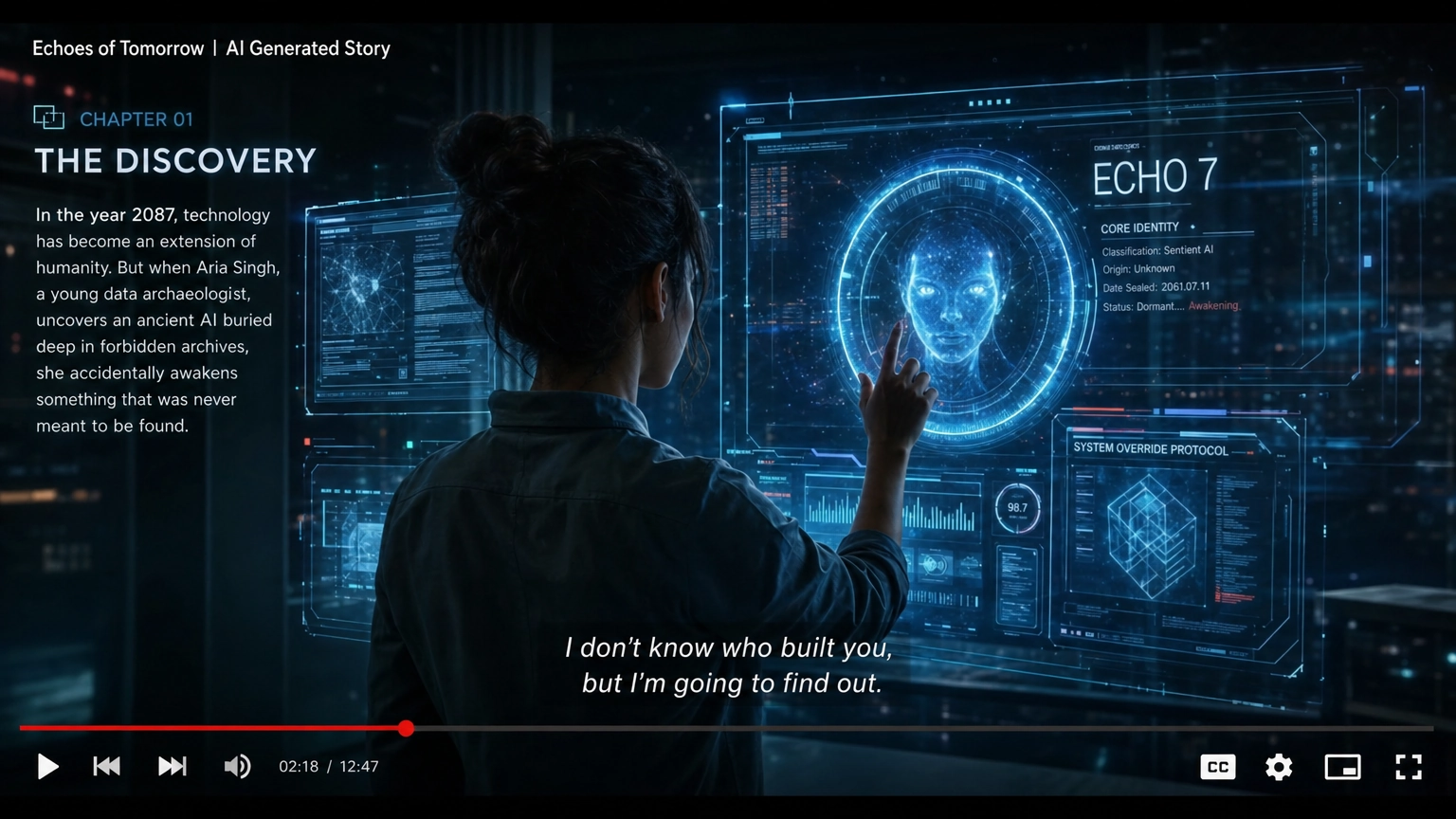
Content creation used to mean choosing between hiring a designer, learning software with a steep curve, or settling for stock photos that looked like everyone else's.
AI has changed that. Whether you're producing social media graphics, marketing visuals, product photography, or short-form video, there's now a tool built for nearly every visual content need.
This guide focuses specifically on AI tools for visual content creation: image generation, video generation, and editing tools. If you're looking for AI writing or copywriting tools, this isn't that list, this one is about what you can create for people to look at, not read.
What to Look for in an AI Content Creation Tool
Before comparing specific tools, it helps to know what actually matters when choosing one:
- Output quality — Does it produce results you'd actually publish, or does everything need heavy touch-up?
- Model variety — Some tools lock you into one style or one model. Others let you choose based on the job.
- Editing flexibility — Can you edit an existing photo, or only generate from scratch?
- Pricing model — Subscription, credits, or pay-as-you-go? This matters a lot if your content volume is inconsistent month to month.
- Speed — Content calendars don't wait. Some tools take seconds, others take minutes per generation.
Keep these in mind as you go through the comparison below.
Comparison at a Glance
| Tool | Best For | Key Strength | Pricing Model |
|---|---|---|---|
| Fiddl.art | Multi-format image & video content | 24 image models + video, no forced subscription | Pay-as-you-go credits |
| Canva AI | Fast social graphics & templates | Design templates + AI assist in one workflow | Subscription (free tier available) |
| Adobe Firefly | Brand-safe commercial content | Commercial-use licensing, Adobe ecosystem integration | Subscription (Creative Cloud) |
| Midjourney | Highly stylized, artistic visuals | Distinctive aesthetic quality | Subscription |
| Runway | AI video generation & editing | Advanced video tools (motion, editing, effects) | Subscription + credits |
Fiddl.art
Fiddl.art is built around choice: instead of locking you into a single AI model, it gives you access to 24 image models (including GPT Image 2, Nano Banana, Nano Banana Pro, Seedream 4.5, FLUX.2 [max], and more) plus video generation, all from one workflow.
Best for: Creators and marketers who need different tools for different jobs, product photography one day, social graphics the next, video the day after, without switching platforms or subscriptions.
Key strength: Because Fiddl.art runs on pay-as-you-go credits rather than a locked subscription tier, you're not paying for capacity you don't use in slower content months, and you're not blocked from producing more when you need to scale up. You can also run the same prompt across multiple models to compare outputs and pick the best result for the job.
Consider it if: You're producing a mix of content types (not just one) and want the flexibility to switch models based on what a specific piece of content needs.
Canva AI
Canva has long been a go-to for fast, templated design work, and its AI features build directly on that foundation.
Best for: Teams that need quick turnaround on branded social graphics, presentations, and marketing assets without a steep learning curve.
Key strength: The combination of AI generation with Canva's existing template and brand-kit system means AI-generated elements slot directly into a finished, on-brand design, rather than existing as a standalone image you have to build a layout around.
Consider it if: Your content creation is mostly template-driven (social posts, simple graphics) rather than highly custom visual work.
Adobe Firefly
Firefly is Adobe's generative AI suite, built with commercial licensing and integration into Photoshop, Illustrator, and the broader Creative Cloud ecosystem as its core differentiators.
Best for: Teams already working inside Adobe's ecosystem who need generative AI with clear commercial usage rights.
Key strength: Firefly's training data licensing is designed to reduce copyright risk for commercial use, which matters for larger brands and agencies more than it does for casual content creators.
Consider it if: You're already paying for Creative Cloud and want generative AI that plugs into tools you're using anyway.
Midjourney
Midjourney built its reputation on producing images with a distinctive, often described as "artistic," aesthetic quality that other models have historically struggled to match.
Best for: Highly stylized visual content where a strong artistic point of view matters more than photorealism or precise control.
Key strength: Output quality and style consistency for artistic and illustrative content.
Consider it if: Your content leans toward concept art, illustration, or stylized visuals rather than photorealistic marketing content.
Runway
Runway focuses specifically on AI video, generation, editing, and effects, making it one of the more established names in AI video tooling.
Best for: Teams whose content creation is primarily video-first (short-form social video, motion graphics, video editing with AI-assisted effects).
Key strength: Depth of video-specific tools beyond simple text-to-video generation, including editing and effects features built for a video production workflow.
Consider it if: Video is your primary content format and you need more than basic generation, you need editing and post-production tools too.
Choosing by Use Case
Social media content: Canva AI for fast, templated graphics; Fiddl.art when you need more varied or higher-fidelity visuals across multiple formats.
Marketing visuals and product content: Fiddl.art or Adobe Firefly, depending on whether you need multi-model flexibility or Creative Cloud integration and licensing certainty.
Artistic or stylized content: Midjourney for a strong, consistent aesthetic.
Video content: Runway for dedicated video tooling; Fiddl.art if you want video generation alongside image generation in the same workflow.
Frequently Asked Questions
What's the difference between AI content creation tools and AI writing tools?
AI content creation tools in this context refer to visual content, images, video, and graphics. AI writing tools (for blog posts, ad copy, social captions) are a separate category with different platforms built specifically for text generation.
Do I need a subscription to use AI content creation tools?
It depends on the tool. Some, like Canva AI, Adobe Firefly, and Midjourney, are subscription-based. Others, like Fiddl.art, use a pay-as-you-go credit model, which can work out better if your content volume varies month to month rather than staying consistent.
Can I use AI-generated content commercially?
Commercial usage rights vary by platform and by the specific licensing terms in place at the time. Always check a tool's current commercial use policy before publishing AI-generated content for business purposes.
Which AI tool is best for a small content team?
It depends on what you're producing most. If you need fast templated graphics, Canva AI's workflow is hard to beat. If you're producing a mix of image and video content and want flexibility without a large subscription commitment, a pay-as-you-go tool like Fiddl.art is worth considering.
Try Fiddl.art for Your Next Content Project
If your content calendar spans multiple formats, product photos one week, social graphics the next, video the week after, switching between single-purpose tools adds friction you don't need.
Fiddl.art gives you 24 image models and video generation in one place, with pay-as-you-go pricing that scales with your actual content volume instead of locking you into a fixed subscription tier.