Every "best AI image generator" list you'll find right now tells you the same thing: pick a winner, move on. But the winner changes. In September alone, OpenAI's own newer release, GPT Image 2.5, passed GPT Image 2 for the top spot on every major leaderboard, both for generation and editing, while Reve 2.1, which led editing back in August, fell out of the top ten.
That's the real problem with most "best of 2026" roundups. They're a snapshot dressed up as an answer. This one's built differently: a quick pick if you just want to get started, then a full ranking by what each model actually does best, then the two leaderboards worth bookmarking so you can check for yourself whenever a new model shows up claiming the top spot.
If you want the short version first, skip ahead. If you want to understand why "best" is a moving target and how to keep up with it, keep reading.
The short answer
If you just want a pick, here it is.
- Best overall: GPT Image 2.5 (Sunburst and Flare). They hold the top two spots for image generation on both Artificial Analysis and Arena AI, close enough to each other to call it a tie.
- Best for editing: GPT Image 2.5 Sunburst and Flare also lead the editing boards. Below them, MAI-Image-2.6 and GPT Image 2 split third place depending on which leaderboard you check.
- Best for 4K and heavy editing: Nano Banana Pro. Native 4096×4096 output, no other model here ships that as standard. (Fiddl's flat-rate offer covering five models runs Nano Banana 2, the newer, faster sibling model built for speed over Pro's finer detail, more on that further down.)
- Best for a specific look: Midjourney V8.1, still unmatched for cinematic or painterly style over literal accuracy.
- Best open-weight, self-hosted: FLUX.2. Full open weights, runs on your own GPU.
- Best free and unlimited: Stable Diffusion 3.5, no cost beyond the hardware you run it on.
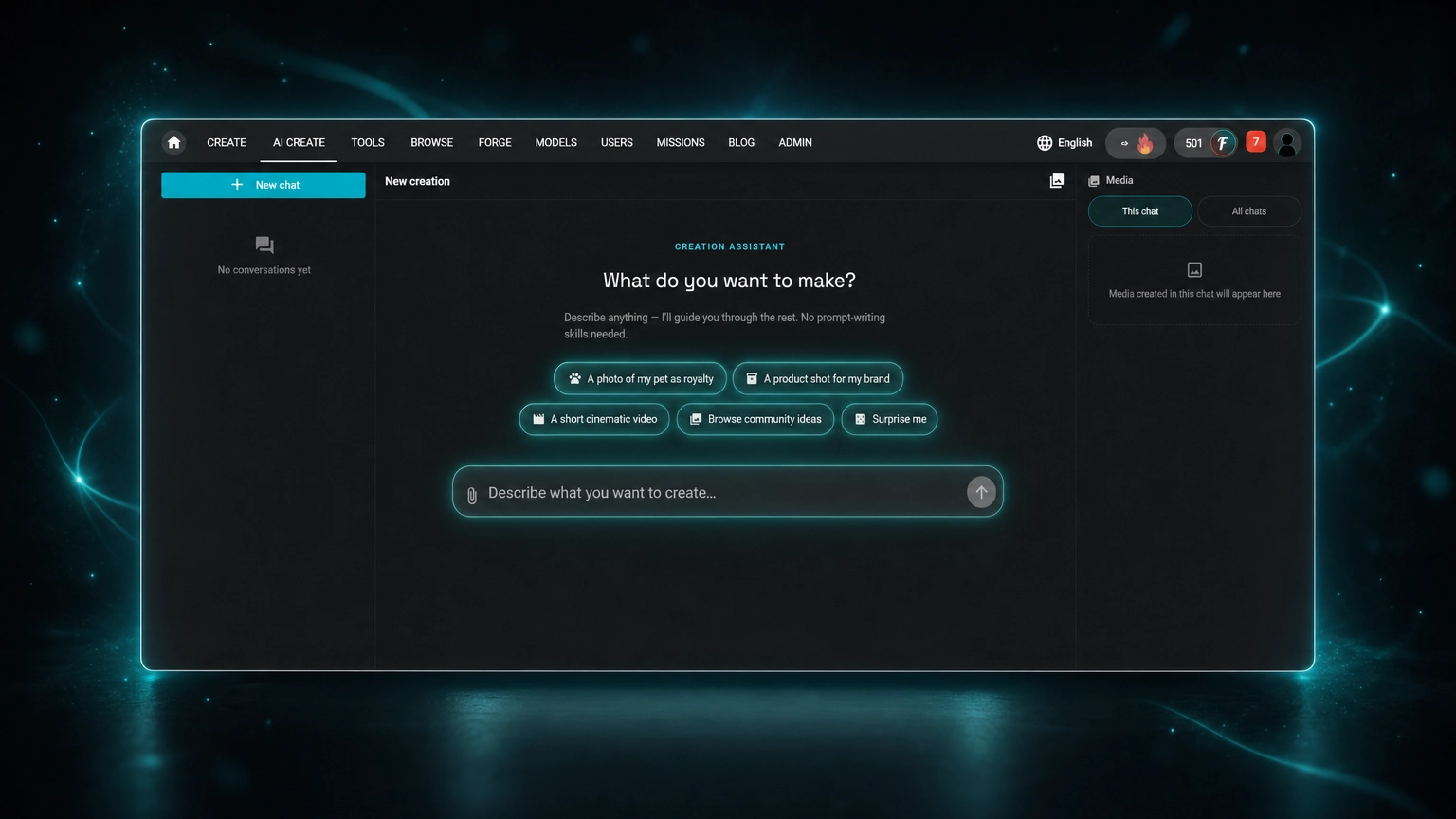
To try the models yourself instead of taking a leaderboard's word for it, Fiddl gives you flat, no-subscription access to five of its top models: Seedream 5 Pro, GPT-Image 2, and Nano Banana 2 for images, plus Veo 3.1 and Seedance 2.5 for video. Each is $35, pay once. GPT Image 2 is still third on both leaderboards, ahead of MAI-Image-2.6.
Sources: Artificial Analysis Text-to-Image and Image Editing leaderboards, Arena AI Text-to-Image and Image Edit arenas
Why "best" keeps changing, and how to check it yourself
Every "best AI image generator" list is a snapshot. In the last six weeks, the top of both major leaderboards changed hands. In August, GPT Image 2 led image generation and Reve 2.1 led editing. In September, OpenAI released GPT Image 2.5 Sunburst and Flare, and the two now hold the top two spots for both generation and editing. Reve 2.1 has fallen to 13th on Artificial Analysis editing and 14th on arena ai.
None of that made an older guide wrong on the day it was published. It makes "best" a moving target, and most roundups don't say when they last checked.
The two leaderboards worth bookmarking
Two independent, blind-vote arenas track this in real time. Voters compare two anonymous images from the same prompt and pick the one they prefer, without knowing which model made which.
Artificial Analysis runs separate boards for text-to-image and editing, and lists API price per 1,000 images next to each model. That makes it the easiest place to see what a ranking costs.
Arena.ai runs its own arenas with its own vote pool. It flags new models as "preliminary" until enough votes come in, worth knowing when a brand-new model sits at the top.
Right now the two agree on the top two spots for both generation and editing. They start to disagree further down. For editing, Artificial Analysis puts MAI-Image-2.6 third, while arena ai puts GPT Image 2 third. The scores also sit on different scales, so never compare a raw number from one board with a number from the other. Compare rank order, and check the date on whichever board you're reading.
Sources: Artificial Analysis, Arena AI
What changed in the last 6 weeks
- GPT Image 2.5 launched (Sep 2026). Sunburst and Flare took the top two generation spots on both boards. On Artificial Analysis they score 1196 and 1190, ahead of GPT Image 2 at 1171. On arena ai (Sept 24) they score 1424 and 1401, still marked preliminary.
- GPT Image 2 slipped from first to third. It still ranks ahead of MAI-Image-2.6 on both boards.
- MAI-Image-2.6 arrived (Aug 2026). On arena ai's Aug 25 snapshot it ranked second, behind GPT Image 2. It's now fourth on arena ai and fifth on Artificial Analysis.
- Reve 2.1 lost the editing lead. It topped the older editing board in August. Artificial Analysis then rebuilt editing into 17 task-specific categories in early September. It now ranks 13th on Artificial Analysis editing and 14th on arena ai.
- A cheaper MAI variant appeared. MAI-Image-2.6-Flash (Sep 2026) ranks fourth on Artificial Analysis editing at style=background:#1212129.5 per 1,000 images, against GPT Image 2.5 Sunburst's $210.7.
Sources: Artificial Analysis Text-to-Image and Image Editing leaderboards, Arena AI
Best for editing: GPT Image 2.5, for now
GPT Image 2.5 Sunburst and Flare hold first and second on both editing boards. Artificial Analysis has them at 1167 and 1146. Arena AIhas them at 1520 and 1491 (Sept 7, preliminary).
Below them, the boards split. Artificial Analysis puts MAI-Image-2.6 third and MAI-Image-2.6-Flash fourth, with GPT Image 2 fifth. Arena AI puts GPT Image 2 third, Grok Imagine fourth, and MAI-Image-2.6 fifth.
Price is where the split matters. Artificial Analysis lists GPT Image 2.5 Sunburst at $210.7 per 1,000 images, MAI-Image-2.6 at $38.9, and MAI-Image-2.6-Flash at style=background:#1212129.5. If you're editing at volume, third or fourth place at under a fifth of the price is a real option.
Reve 2.1 led this category in August and is now 13th on Artificial Analysis. That's how fast this category moves.
Sources: Artificial Analysis Image Editing leaderboard, Arena AI Image Edit Arena
The models, ranked by what they're actually best at
No single model wins everything. Three of these you can test right now on Fiddl at a flat $35 each, no subscription (Fiddl also offers Veo 3.1 and Seedance 2.5 for video on the same terms).
GPT Image 2 — best overall of the three on Fiddl
GPT Image 2 (medium) sits third on both major leaderboards, behind only OpenAI's own newer release. On Artificial Analysis it scores 1171. On Arena AI it scores 1383. It still ranks ahead of Microsoft's MAI-Image-2.6 on both boards.
Just released: OpenAI shipped GPT Image 2.5 (Sunburst and Flare) in September, and the two now hold the top two spots on both leaderboards, ahead of GPT Image 2. They're not available on Fiddl yet. If a leaderboard-topping model matters more to you than access today, that's the one to watch. Everything else in this section still holds.
Try GPT Image 2 through Fiddl's flat-rate offer, $35, no subscription, makes 250+ images.
Sources: Artificial Analysis Text-to-Image leaderboard, Arena AI Text-to-Image Arena
Nano Banana 2 — fastest of the three, built for speed over fine detail
Nano Banana 2 is Google's faster sibling to Nano Banana Pro, released February 2026 on Gemini 3.1 Flash Image. It generates in about 4 to 6 seconds, roughly 2 to 3 times faster than Pro's 5 to 20 seconds, and costs less per image.
On Arena AI's current leaderboard it ranks 9th for text-to-image generation. For editing, it scores close to Nano Banana Pro, 1387 versus Pro's 1390, despite Pro costing more to run. If your work is mostly editing rather than generating from scratch, that gap barely matters.
It's built for multi-subject compositions and quick iteration rather than final-stage production detail. If you need native 4K output or finer typography and lighting control, that's Nano Banana Pro (below). If you need to move fast through a lot of variations, or you're editing more than you're generating fresh, Nano Banana 2 is the one built for that.
Try Nano Banana 2 through Fiddl's flat-rate, five-model offer, no subscription, one price.
Sources: Arena AI Text-to-Image and Image Edit Arenas (Sept 7 board, Sept 15 reading), nanobanana.org, Fal.ai
Seedream 5 Pro — ByteDance's entry, competitive on text-to-image
On Arena AI's current leaderboard (same board and reading as Nano Banana 2's numbers above), Seedream 5 Pro ranks 10th for text-to-image, Elo 1257, one spot behind Nano Banana 2, a few points apart, not a meaningful gap.
Try Seedream 5 Pro through Fiddl's flat-rate, five-model offer, no subscription, one price.
Source: Arena AI Text-to-Image Arena (Sept 7 board, Sept 15 reading)
Nano Banana Pro — the 4K and fine-detail option
Nano Banana Pro is Google's Gemini 3 Pro Image model, the higher tier above Nano Banana 2 in the same family. On Arena AI's current image-editing board (Sept 7 board, Sept 15 reading), it ranks 9th at Elo 1390, essentially tied with Nano Banana 2's editing score of 1387 despite costing more to run.
Where it separates from Nano Banana 2 is output quality at high resolution: native 4K generation and finer control over lighting and material detail, the kind of thing that matters for a final production asset rather than a quick draft. It takes longer to generate, 5 to 20 seconds versus Nano Banana 2's 4 to 6.
Nano Banana Pro is part of Fiddl's full catalog, it's the most recently active model on the platform by creation activity, though it isn't one of the five included in the flat-rate $35 offer above. If 4K native output is the deciding factor, it's available, just outside that specific bundle.
Sources: Arena AI Image Edit Arena (Sept 7 board, Sept 15 reading)
Midjourney V8.1 — the aesthetic case, not the leaderboard case
Midjourney doesn't show up near the top of either major leaderboard right now, and that's worth explaining rather than skipping past. It has no public API, so it's largely absent from the automated testing that feeds these boards. What Artificial Analysis does track are older Midjourney versions, ranked well down the list, v7 Alpha, v6, and v6.1 all sit outside the top 100.
That's a sampling gap, not a quality verdict. The people voting in these arenas are mostly testing models they can call programmatically, in bulk. A subscription tool behind a chat interface never gets tested at that volume, so its score reflects who's voting more than what the model can do.
What Midjourney still has is a distinct visual style the leaderboards don't measure, painterly, cinematic, art-directed in a way that "does this match the prompt" scoring doesn't capture. It's the tool most people mean when they say an image "looks AI-generated," in a complimentary sense. If your work is directed creative or illustration, that's a real reason to use it regardless of where it lands in a blind vote. If your work runs through an API pipeline, the lack of one rules it out on its own.
Midjourney is subscription-only, style=background:#1212120 to style=background:#12121220 per month, with no free tier.
Sources: Artificial Analysis Text-to-Image leaderboard, ai.joaoqueiros.com (sampling bias analysis, July 2026 snapshot)
FLUX.2 — best open-weight option, hosted or self-run
Among open-weight models you can run yourself, FLUX.2 [dev] currently ranks 6th out of 19 on Arena AI's dedicated open-source leaderboard, Elo 1146. That's a clear lead over Stable Diffusion 3.5 Large, which sits 18th on the same board at Elo 938.
From Black Forest Labs, FLUX.2 [dev] ships with downloadable weights, no per-image API cost once you're running it locally, no vendor lock-in, and the ability to fine-tune on your own data. A lighter variant, [klein] 4B, trades some quality for speed and ranks 14th on the same board.
If self-hosting isn't something you want to set up and maintain, Fiddl's catalog includes seven FLUX variants directly (Flux 2 Dev, FLUX.2 Max, Flux 2 Pro, Flux Dev, Flux Kontext, Flux Pro, Flux Pro Ultra), hosted access to the same model family without the GPU setup.
Worth a mention in the same category: Z-Image Turbo, from Alibaba, Apache 2.0 licensed and free to self-host like FLUX.2 and Stable Diffusion. It ranks 10th on the same Arena AI open-source board, Elo 1084, ahead of Stable Diffusion but behind FLUX.2. Its API-hosted price is the cheapest in this comparison, $5.0 per 1,000 images on Artificial Analysis, a middle-ground option if FLUX.2's quality is more than you need and Stable Diffusion's rank is less than you want.
Sources: Arena AI open-source leaderboard, Sept 24, 2026; Artificial Analysis Text-to-Image leaderboard - Z-Image Turbo pricing
Stable Diffusion 3.5 — best free and unlimited, not best quality
Stable Diffusion 3.5 Large ranks 18th of 19 models on Arena AI's open-source leaderboard, Elo 938, the lowest-ranked model in that comparison including FLUX.2's variants above it.
What it still has going for it: it's free to run once you have the hardware, fully open weight, and the most established, best-documented option for self-hosting, more tutorials, more community tooling, more fine-tuned variants than newer open releases. If output quality is the priority, FLUX.2 currently outranks it on the same board. If zero cost and a mature ecosystem matter more, Stable Diffusion 3.5 is still the default choice for a lot of people, just not the technical leader anymore.
It's also in Fiddl's catalog directly, if hosted access without local setup is preferable to running it yourself.
Sources: Arena AI open-source leaderboard, Sept 24, 2026
Ideogram — best for typography-heavy design
Ideogram 4.0 (Quality) ranks 2nd among open-source models on Arena AI's current board, Elo 1205, just behind Qwen's entry (below). Its case has always been text rendering, logos, posters, packaging, anything where the words in the image need to actually read correctly, a weak spot for most other models on this list.
Ideogram isn't part of Fiddl's model catalog. Fiddl's Recraft 3 SVG is the closest built-in option for text-heavy, print-ready work, more on that in the use-case section below.
Source: Arena AI open-source leaderboard, Sept 24, 2026
Qwen Image — best for multilingual prompts
Qwen Image 2.1 currently sits 1st among open-source models on Arena AI, Elo 1228, just ahead of Ideogram. That result is marked preliminary, with a thinner vote sample than the established models on the same board, so treat the top spot as provisional rather than settled.
Alibaba's Qwen line is generally the strongest option here for non-English and multilingual prompts, particularly Chinese and Arabic script rendering, a gap most of the Western-built models on this list don't close well.
Qwen isn't part of Fiddl's model catalog.
Source: Arena AI open-source leaderboard, Sept 24, 2026
Which model fits your actual job
The rankings above answer "which model wins blind preference votes." This section answers a narrower question: given a specific kind of work, which model actually fits.
Marketing and ad creative. GPT Image 2 for text-heavy assets, headlines, CTAs, anything where the words in the image have to render correctly. Midjourney if the priority is a distinct visual style over literal accuracy.
E-commerce product photography. Nano Banana Pro for final, high-resolution listing images, native 4K matters here. Nano Banana 2 for fast iteration across a large catalog where speed and cost per image outweigh maximum fidelity on any single shot.
Concept art and illustration. Midjourney remains the default for a reason the leaderboards don't capture, a distinct, directed aesthetic rather than literal prompt-matching.
Developer and API pipelines. FLUX.2 [dev] for open weights you can self-host and fine-tune. GPT Image 2 and Nano Banana 2 both have production APIs if self-hosting isn't the goal.
Logos, posters, packaging. Ideogram, built specifically for text that needs to read correctly inside the image, still the clearest gap most other models on this list haven't closed. Fiddl's catalog includes Recraft 3 SVG for this exact use case, vector output for infinitely scalable logos and icons, a closer match to packaging and print work than a raster model like Ideogram.
Pricing, compared honestly
Four different pricing structures are stacked on top of each other in this space, and most roundups compare them as if they were the same thing.
Per-image API pricing. This is how you'd pay to build something on top of one of these models directly. GPT Image 2's API price held steady at $211 per 1,000 images across every leaderboard snapshot checked for this piece, the one number that didn't move.
Subscription. Midjourney: style=background:#1212120 to style=background:#12121220 a month, no free tier, no per-image billing, you pay whether you generate ten images or a thousand that month.
Free, self-hosted. FLUX.2 and Stable Diffusion 3.5, if you download the open weights and run them on your own GPU, the model itself costs nothing. You're paying for hardware, or a cloud GPU rental, instead. Not free in practice, just billed differently. Both are also available hosted, without the setup, through platforms like Fiddl if self-hosting isn't something you want to manage.
Points, bought in bulk. Fiddl runs on a points system across its full catalog of 21 image models, images, videos, and model training all draw from the same balance. Points are sold in tiers with volume discounts: 1,000 points for style=background:#1212120, up to 40,000 for $280 at 30% off (one-time payment or subscription).
Fiddl also runs a separate flat-rate offer covering five models: Seedream 5 Pro (100+ images), GPT-Image 2 (250+ images), Nano Banana 2 (100+ images), Veo 3.1 (10+ videos), and Seedance 2.5 (20+ videos). Each is $35, pay once, and includes a free 129-page creator guide, Make Images Worth Keeping. This offer runs per model rather than as a shared points pool, pick the model you want and that $35 covers it.
The honest comparison isn't "which is cheapest," it's which structure matches how much you'll actually use. Heavy, ongoing use through code favors a direct API relationship where marginal cost per image is what matters. Occasional or project-based use favors a points balance you top up as needed.
Sources: Artificial Analysis Text-to-Image leaderboard (GPT Image 2 API pricing), yojana4u.com (Midjourney pricing), Fiddl.art pricing page
Can you get uncensored / NSFW output?
Most closed, API-based models enforce content policies that block sexual content outright, this includes GPT Image 2, Nano Banana Pro, Nano Banana 2, and Seedream 5 Pro. These policies also catch some legitimate work unintentionally, several online reports describe Midjourney blocking reference images or flagging body-type keywords for entirely non-sexual projects, character design, medical or fitness content, figure studies.
Self-hosted, open-weight models are the more reliable answer to "no restrictions." Stable Diffusion and FLUX.2, run locally, aren't gated by a provider's content policy the way an API call is, the operator sets the rules rather than the provider.
Two things worth being precise about. Open weights aren't the same as no rules, the license each model ships under still typically prohibits illegal content, and running a model locally doesn't exempt anyone from local law. And "uncensored" isn't a single toggle, it varies by exactly what's being generated, not a blanket yes or no.
For a closer comparison of platforms built specifically for less-restricted generation, see Fiddl's full breakdown of unrestricted AI image generators.
Sources: PCMag, general model licensing terms for Stable Diffusion and FLUX.2
What nobody's telling you
A few patterns showed up across the pages actually ranking for this keyword, gaps this post can close because they've been dealt with directly above rather than glossed over.
Nobody tells you how fast the leaderboard moves, because most only check it once. This post's own research pulled genuinely different numbers within a single week, GPT Image 2 topped both major boards at the start of the process, then GPT Image 2.5 displaced it days later, on both generation and editing. A ranking with no check date attached is already out of date the moment it's read.
Editing and generation get blurred into one score. Most roundups rank a model once and apply that rank to everything it does. The two are tracked separately on real leaderboards, and the leaders don't always match, a model can sit mid-pack on generation while doing real work on a specific editing task. A single "best" number hides that.
NSFW and uncensored use gets a single evasive line, if it gets one at all. It's a real, repeated question, the section above tries to answer it straight rather than skip it.
Pricing gets compared without normalizing for structure. A $211-per-1,000-image API rate, a style=background:#1212120-to- style=background:#12121220 monthly subscription, and a $0 self-hosted model with real hardware cost behind it aren't the same kind of number, most lists put them in one table anyway.
Open-weight models are usually an afterthought. FLUX.2 and Stable Diffusion get a line each in most roundups despite ranking, sourcing, and cost data that's just as verifiable as the closed models getting three paragraphs.
None of this means the other lists are wrong on the day they were published. It means most of them are answering "what won once," not "how do I keep checking."
FAQ
What is the best AI image generation model in 2026?
There isn't one answer that holds for every use case. GPT Image 2.5 (Sunburst and Flare) currently leads both major leaderboards for straight image generation. For editing, the same two models lead as well, though rank order shifts further down each board. For a distinct visual style, Midjourney remains the choice despite ranking outside the top tier on blind-preference boards. See the ranked breakdown above for the rest.
Is GPT Image 2 still #1?
No. It led both boards earlier this year, but OpenAI's own newer release, GPT Image 2.5, passed it in September 2026. GPT Image 2 currently sits third on both Artificial Analysis and Arena AI's text-to-image leaderboards, still ahead of Microsoft's MAI-Image-2.6.
Which model is best for image editing specifically?
GPT Image 2.5 Sunburst and Flare hold the top two spots on both major editing leaderboards as of late September 2026. Below them, the two boards disagree on order, Artificial Analysis ranks MAI-Image-2.6 third, Arena AI ranks GPT Image 2 third. Reve 2.1 led this category in August and has since dropped to 13th-14th, a reminder of how fast this specific ranking moves.
What's the cheapest way to get good results?
Self-hosted and open-weight, FLUX.2 or Stable Diffusion 3.5, cost nothing beyond hardware once set up. Without setup, Fiddl's points system runs style=background:#1212120 for 1,000 points at the low end (one-time payment or subscription), with volume discounts up to 30% off at higher tiers, or its flat-rate offer covering five top models(three image, two video) at $35 each, no subscription.
Can I run a top model on my own computer?
Yes, for the open-weight ones. FLUX.2 and Stable Diffusion 3.5 both ship downloadable weights you can run locally. The closed, API-only models, GPT Image 2/2.5, Nano Banana, Seedream, don't offer that option, they run on the provider's infrastructure only.